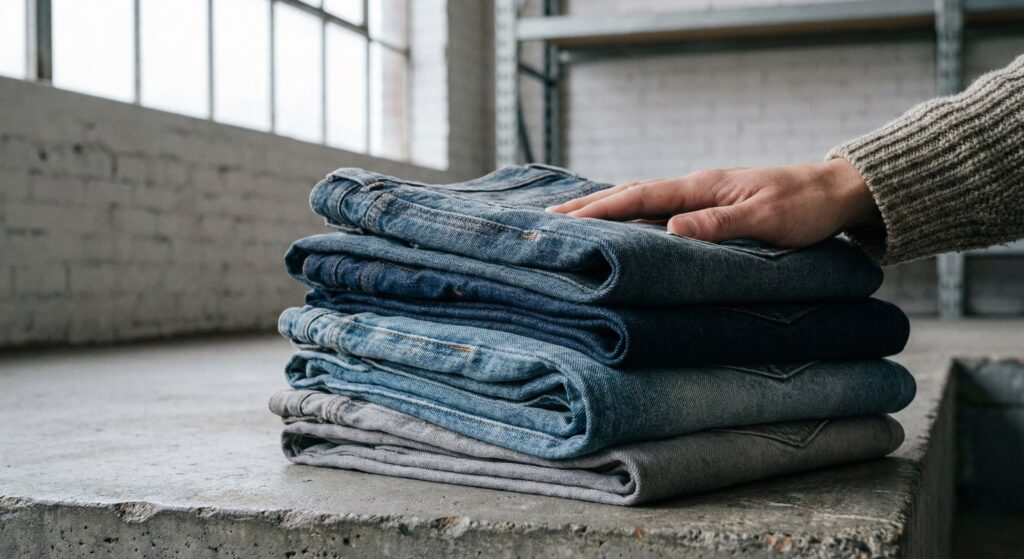
How fashion imagery can be extended into lifestyle contexts without diluting brand codes, fit, or credibility
Introduction
AI-generated imagery is rapidly entering fashion workflows, often presented as a shortcut: faster production, lower costs, infinite variation.
For many brands, this promise is immediately attractive — and just as quickly rejected.
Fashion imagery is not neutral.
It encodes brand discipline, cultural positioning, and an implicit contract of trust. Fit, fabric behaviour, posture, and restraint are not decorative choices; they are structural. When they drift, the damage is not technical. It is reputational.
This article documents a controlled experiment:
Can AI be used to extend existing fashion photography into lifestyle contexts while preserving brand discipline, physical credibility, and editorial restraint?
Why “AI Lifestyle” Commonly Breaks Fashion Brands
Most AI-generated fashion imagery fails for the same reasons:
- Garment fit subtly changes between images
- Fabric weight and drape behave unrealistically
- Styling drifts into generic or influencer-led aesthetics
- Models lose physical tension and presence
- Brand codes dissolve in favour of visual novelty
For brands built on consistency, understatement, and long-term equity, these failures are not minor.
Fashion does not tolerate approximation.
A Different Starting Point: Extension, Not Reinvention
This workflow deliberately avoids generative freedom.
Rather than creating imagery from scratch, the experiment starts with brand-approved references and treats AI as a technical extension layer, not a creative one.
The system is anchored on:
- Existing product imagery as the source of garment fit and proportions
- The same male and female digital twins to preserve posture and physical credibility
- Neutral European environments with strong architectural cues
- Natural daylight only — overcast or directional, never studio-driven
The objective is not exploration. It is controlled extension.
Each image is produced under strict constraints:
- No changes to garment cut, colour, or construction
- Fabric behaviour must remain physically plausible
- Styling remains secondary to product truth
- Editorial tone over trend-driven aesthetics
- Imperfection preferred over synthetic polish
AI operates under discipline, not authorship.
The Test Setup
For this pilot:
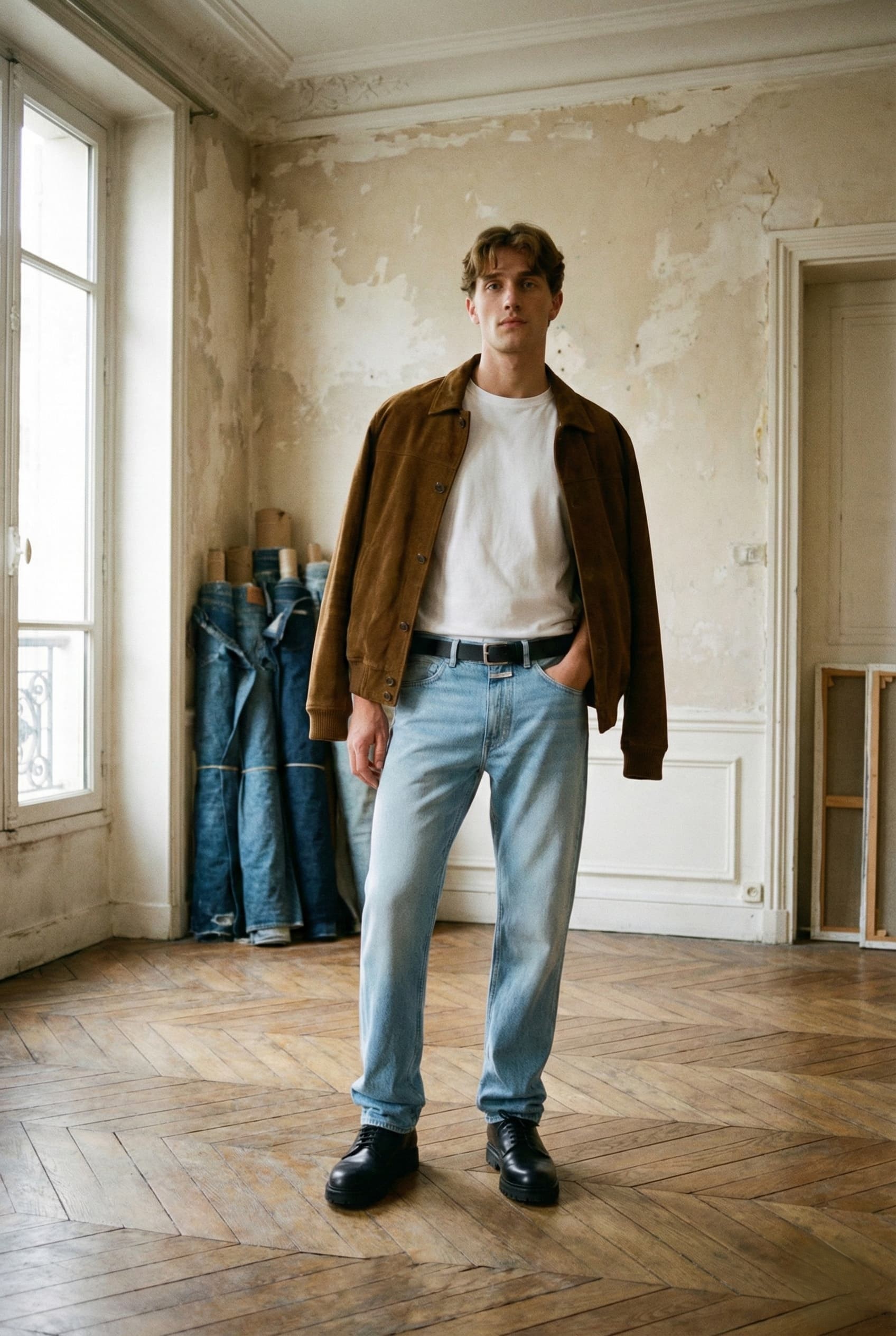
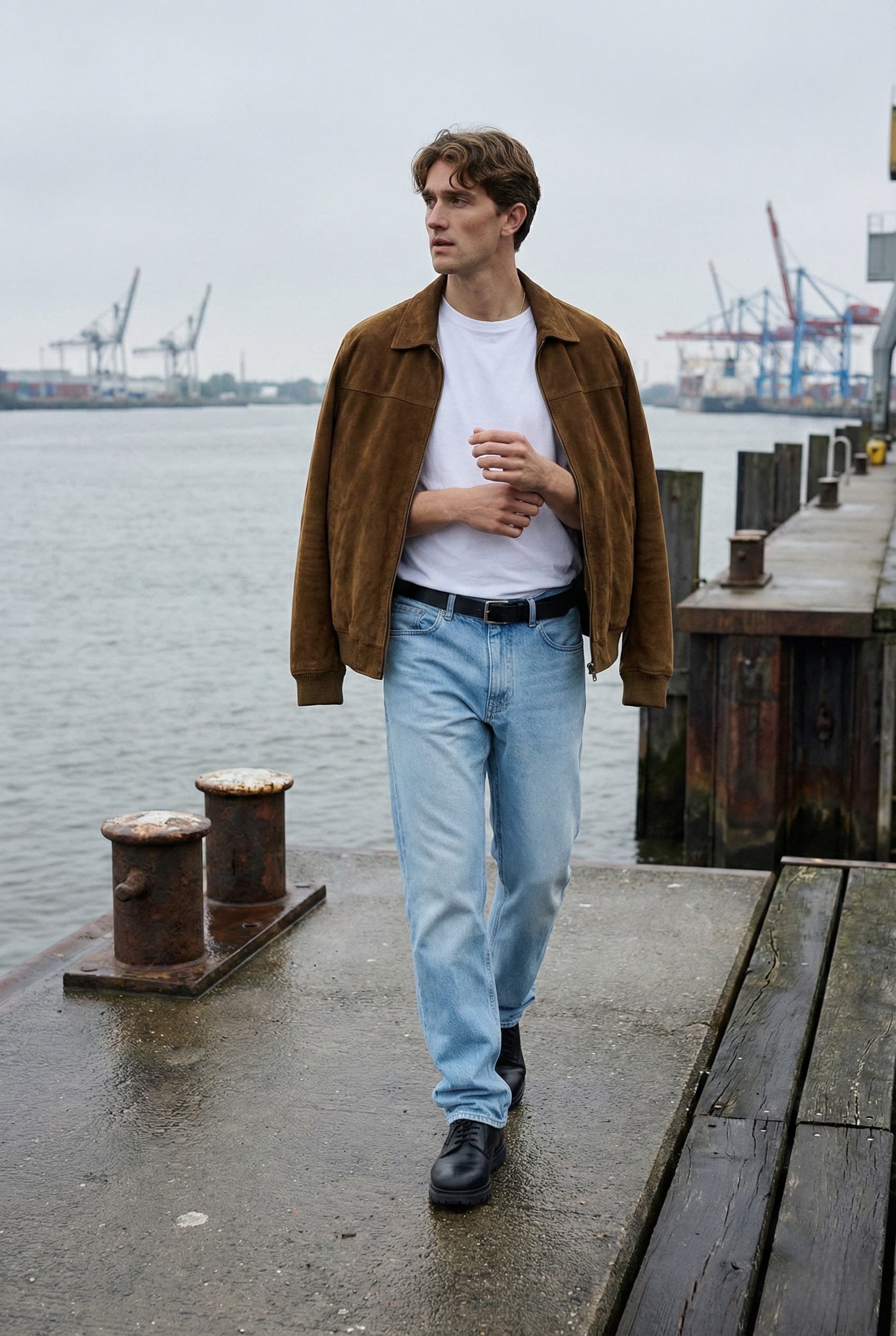
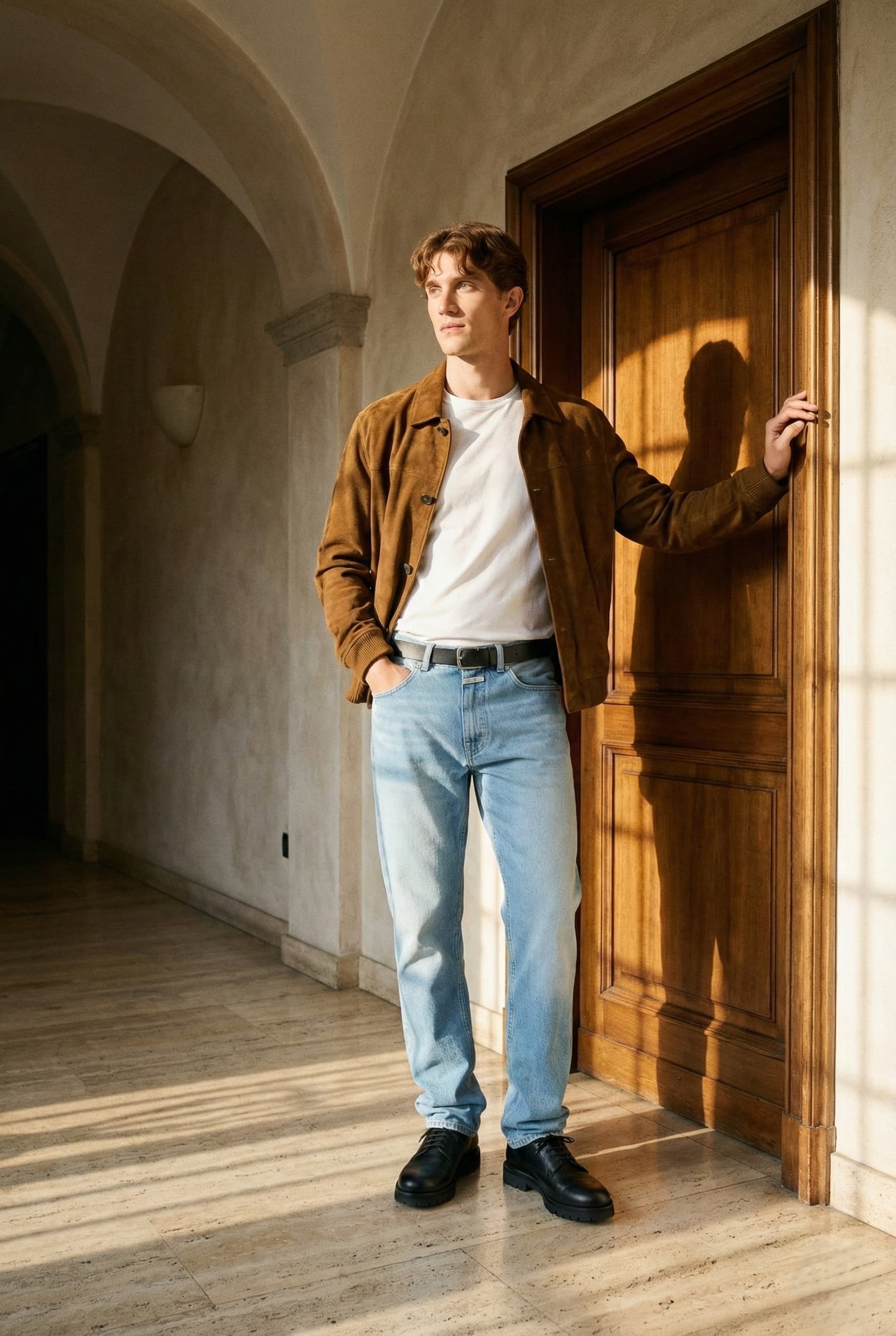
- One male outfit and one female outfit were selected
- Each was extended into three controlled contexts:
- An interior, everyday lifestyle environment
- A northern European industrial exterior
- A warmer, Mediterranean architectural setting
Across all six images, the evaluation criteria mirrored those used by fashion brand teams:
- Fit consistency
- Fabric realism
- Model credibility
- Alignment with established brand codes
- Absence of visual noise, exaggeration, or “AI polish”
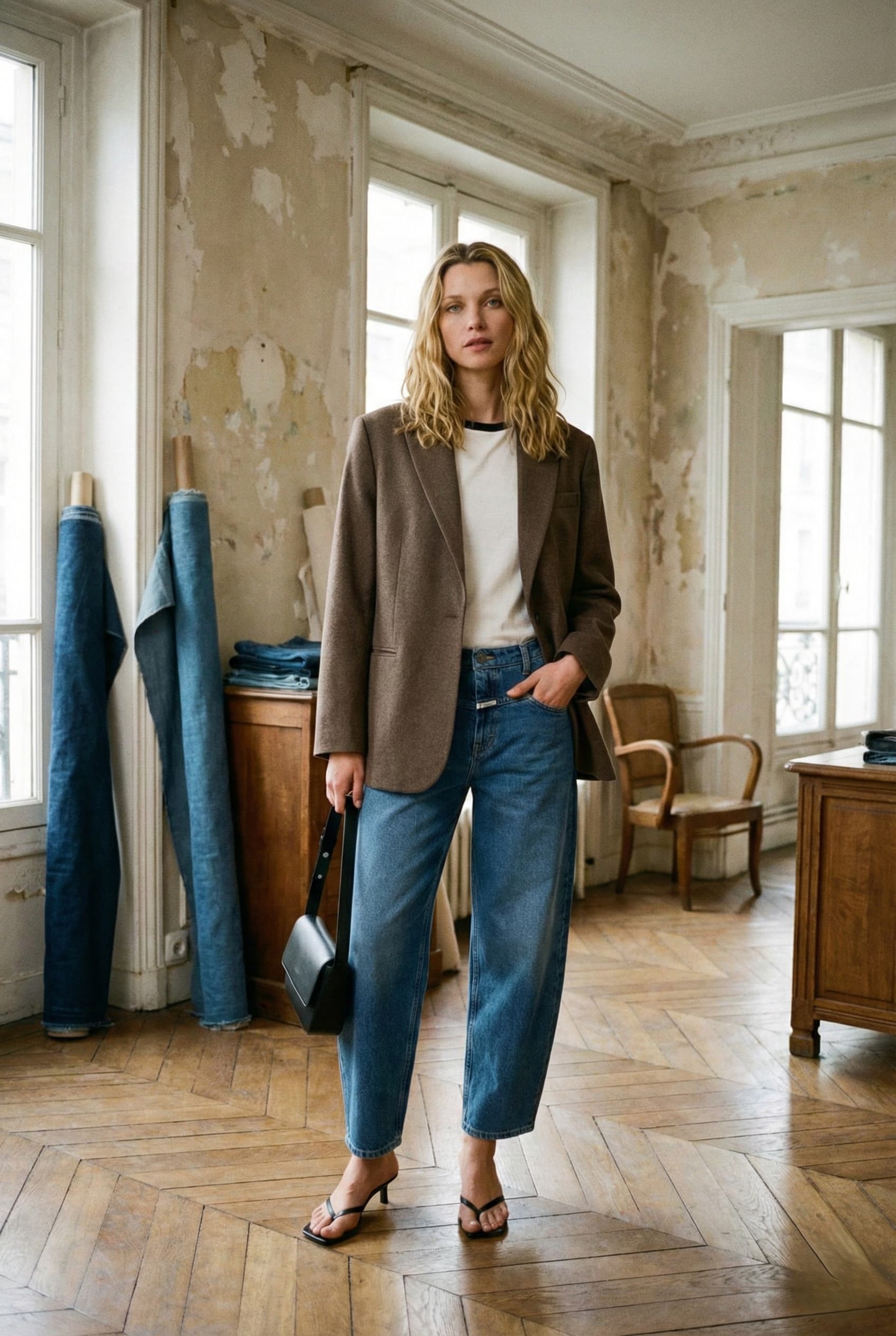
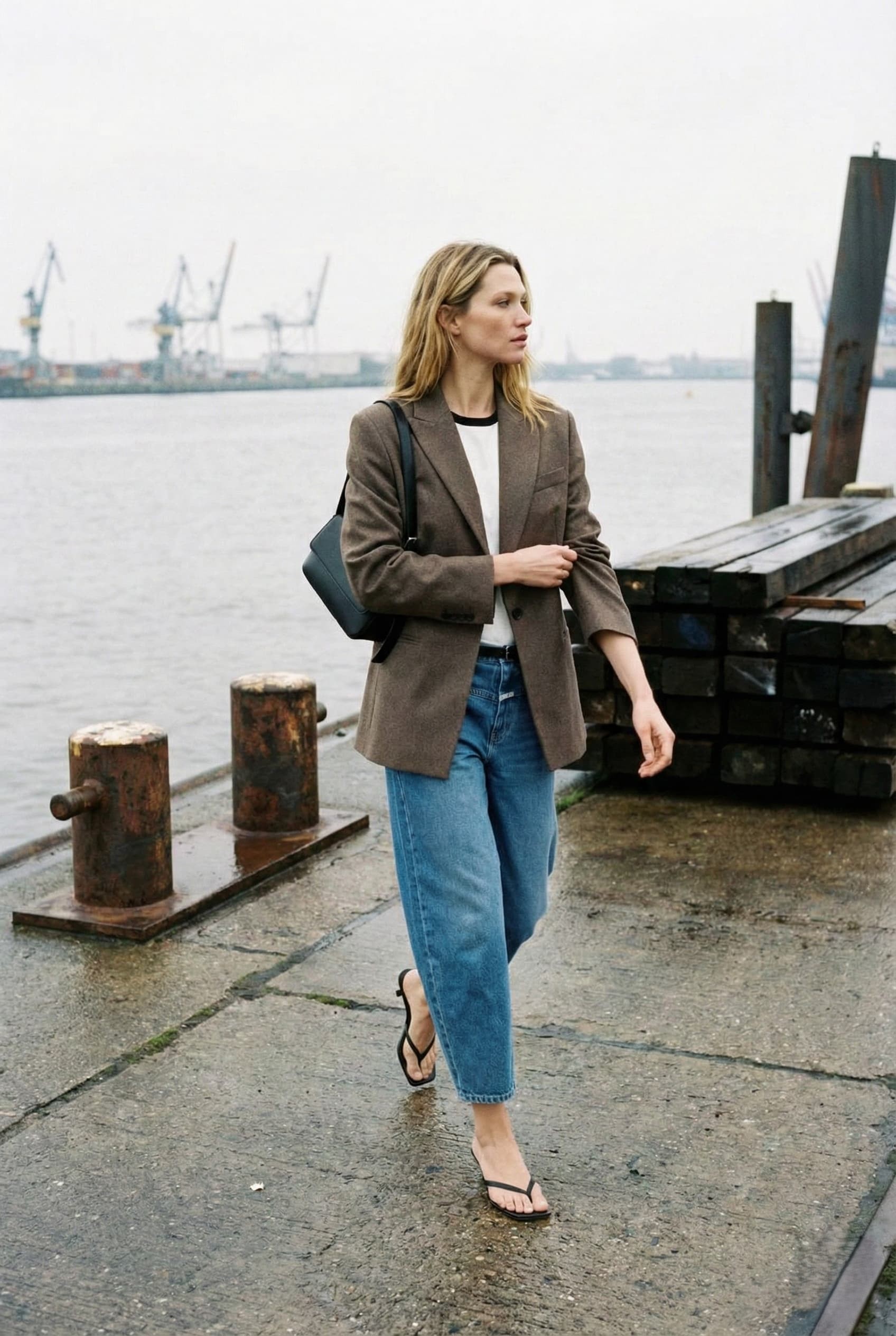
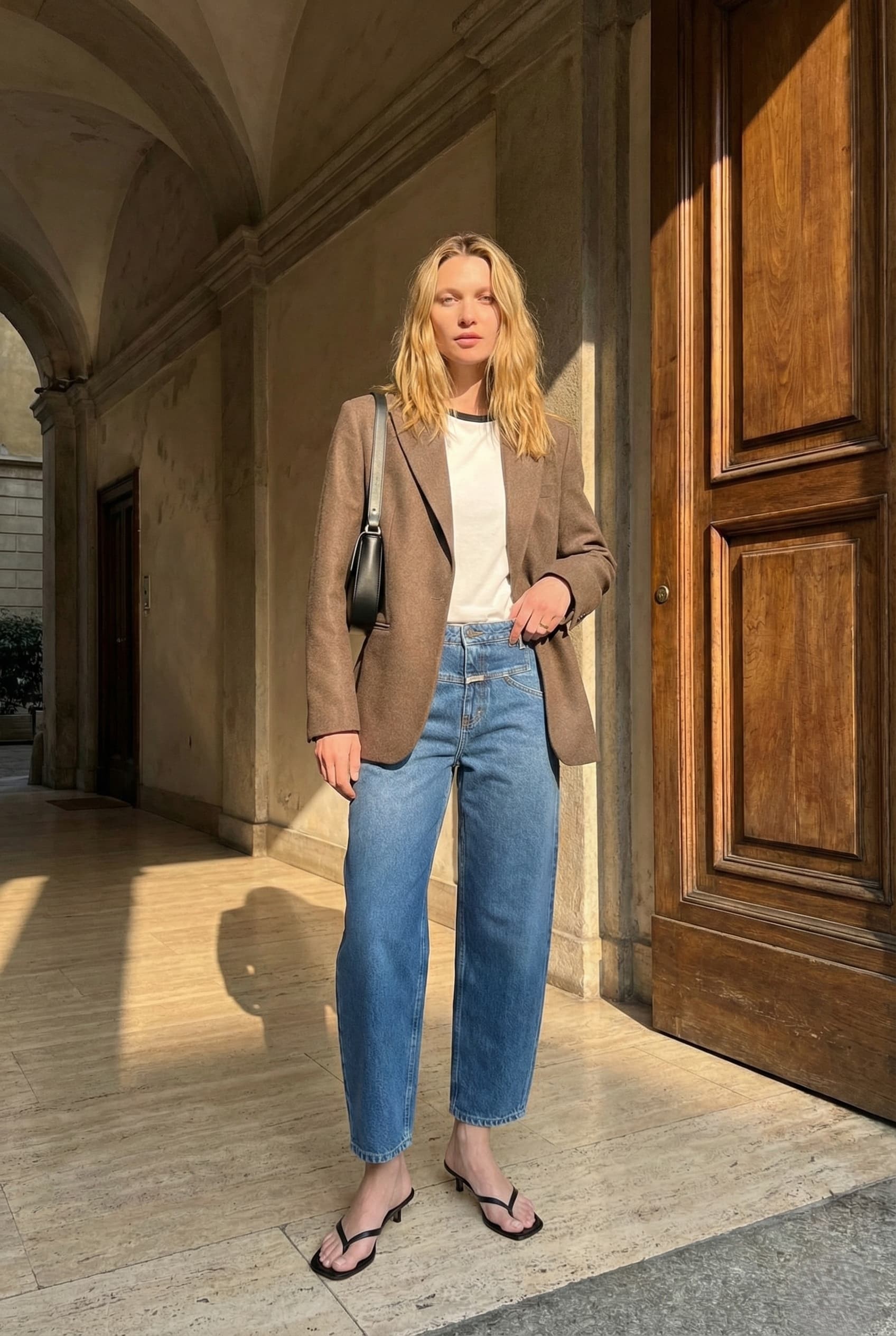
The central question was simple:
Would these images feel acceptable inside a disciplined brand ecosystem — without explanation?
What Worked — and Where Restraint Was Required
What worked
- Garment fit remained consistent across all environments
- Fabric drape and weight stayed believable in motion and at rest
- Models read as real people, not synthetic composites
- Environments supported the product without competing with it
Where restraint mattered
- Over-clean skin instantly reduced credibility
- Excessive symmetry flattened the image
- Lifestyle cues had to remain understated
- Editorial ambition required continuous limitation
The conclusion was not that AI creates fashion imagery — but that, under strict constraints, it can responsibly extend it.
Where This Approach Makes Sense
This workflow is particularly relevant for:
- PDP secondary imagery
- CRM and editorial extensions
- Performance and CRO testing
- Context validation before physical production
It is explicitly not a replacement for:
- Campaign hero assets
- Seasonal storytelling
- Art-directed brand narratives
The value lies in precision, not scale.
Why This Matters for Fashion Brands
The real risk of AI in fashion is not technical failure — it is erosion of brand discipline.
An accuracy-first approach reframes AI as:
- A decision-support tool
- A low-risk experimentation layer
- A way to test context without committing production resources
When limits are clearly defined, AI stops being a threat and becomes operationally useful.
Final Thought
The question for fashion brands is no longer whether AI can generate images.
It is whether AI can operate under the same constraints that already govern brand photography.
This experiment suggests that — within a narrow, disciplined framework — AI can extend fashion imagery without diluting what makes a brand recognisable.
That narrow space is where responsible experimentation belongs.
