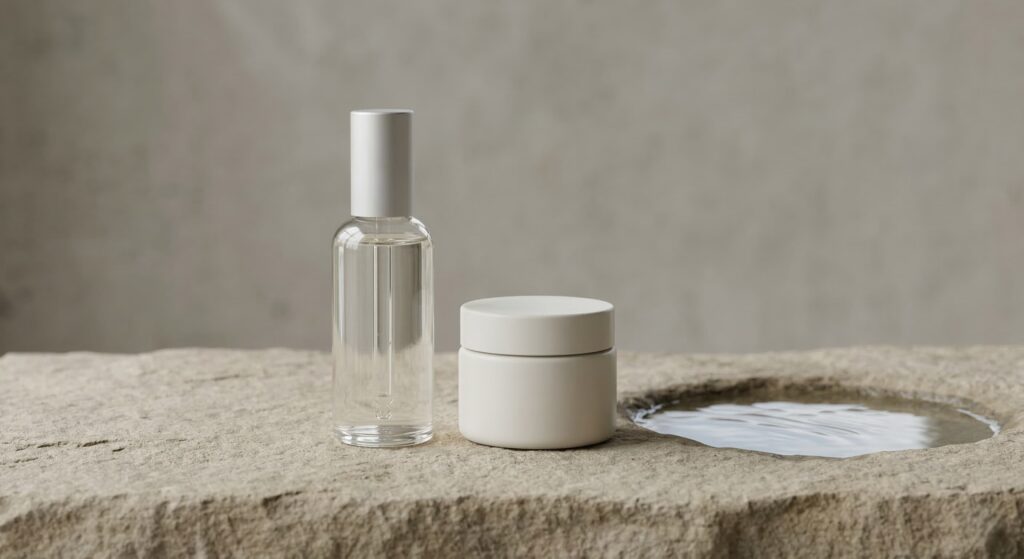
Testing whether AI-assisted imagery can extend skincare product photography without compromising skin credibility, packaging accuracy, or brand trust
Introduction
AI-generated imagery is increasingly being explored by beauty and skincare brands. The promise is attractive: faster visual production, flexible lifestyle contexts, and the ability to create imagery without the logistics of traditional photoshoots. However, skincare imagery operates under stricter expectations than most product categories.
Consumers unconsciously evaluate subtle visual signals: skin texture, ingredient cues, packaging precision, and lighting behaviour. Even small inconsistencies immediately reduce credibility.
For brands built on trust, natural formulations, and long-term customer relationships, these inaccuracies are not aesthetic issues. They undermine product perception.
This article documents a controlled visual experiment: Can AI-assisted workflows extend existing skincare imagery into believable lifestyle contexts while preserving product realism and brand credibility?
Why AI Imagery Often Fails in Skincare
When generative imagery is applied without constraints, the results typically suffer from predictable problems:
- Skin texture becomes unnaturally smooth or plastic
- Packaging geometry subtly shifts between images
- Creams and liquids behave unrealistically
- Lighting exaggerates glow or shine
- Environments feel decorative rather than believable
In beauty and skincare, credibility is largely visual. Consumers may not consciously identify these issues, but they immediately perceive when an image feels synthetic. Trust in skincare is built through restraint and realism, not visual spectacle.
A Realism-First Approach
Instead of starting with creative freedom, this experiment begins with product accuracy as the anchor.
Existing product imagery serves as the foundation, ensuring that packaging identity and label integrity remain intact. AI is then used to extend the product into realistic environments that support the product.
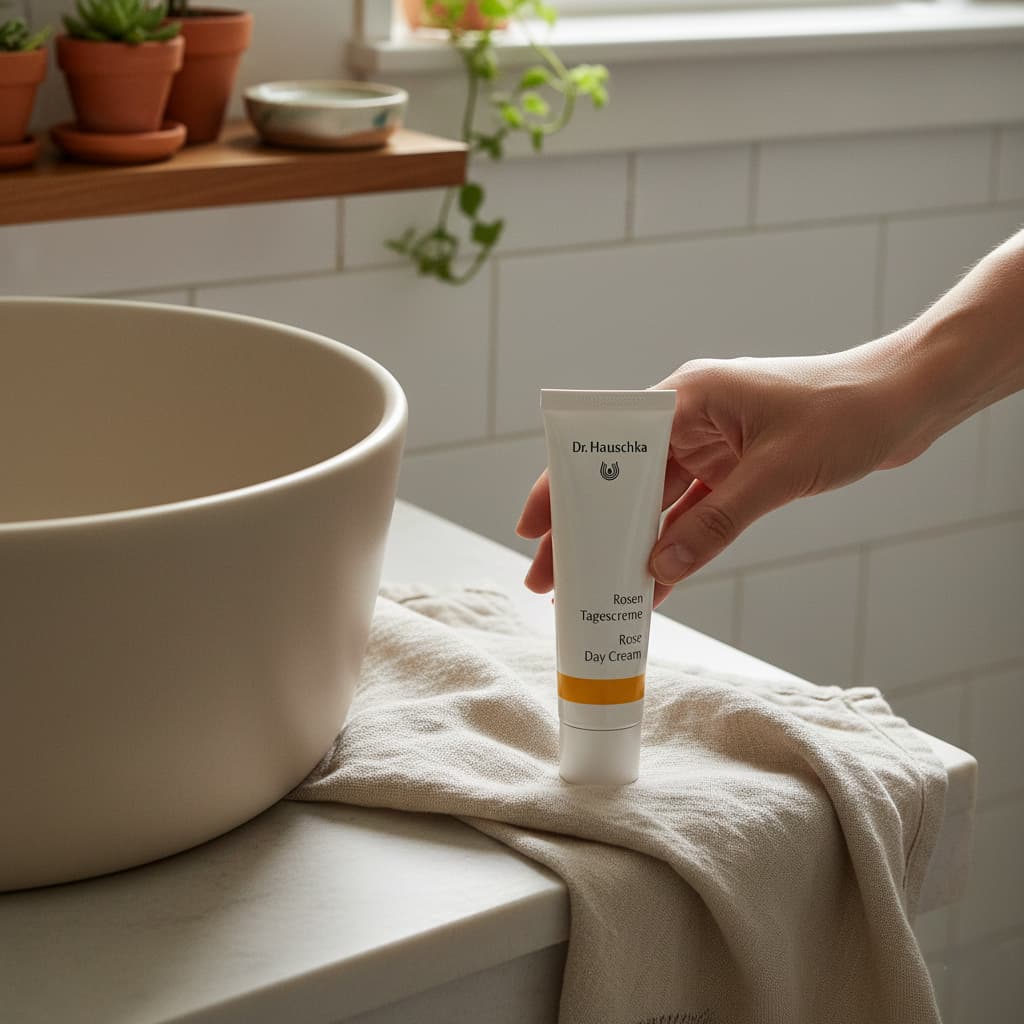
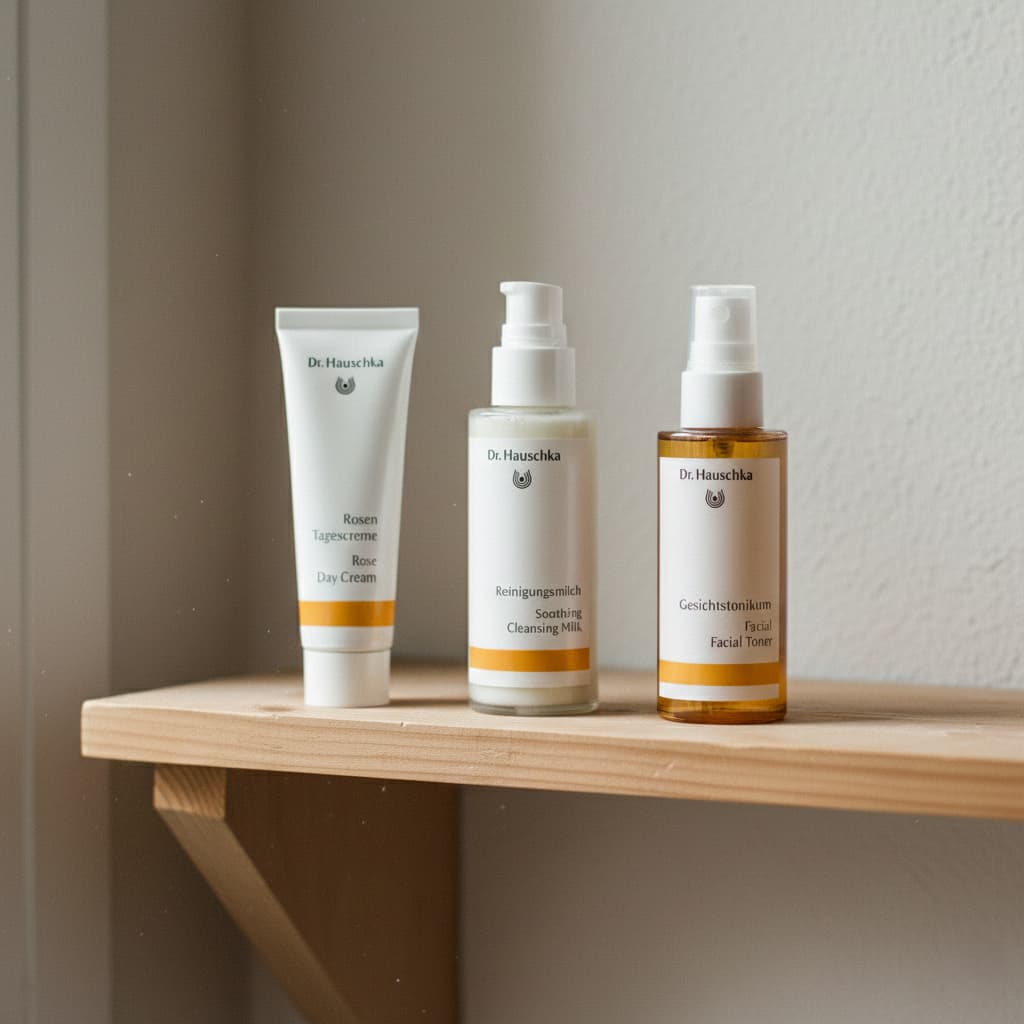
The workflow follows several constraints: Product packaging remains unchanged; Labels must remain readable and accurate; Lighting mimics soft natural daylight; Skin representation prioritises realism over perfection and Environments remain calm and minimal
The goal is not to invent imagery. It is to extend brand-approved visuals into credible contexts.
The Experiment Setup
For this pilot experiment, several skincare products were selected from a botanical-focused brand environment similar to Dr. Hauschka’s visual language. Each product was tested across different context types:
Natural Material Environments
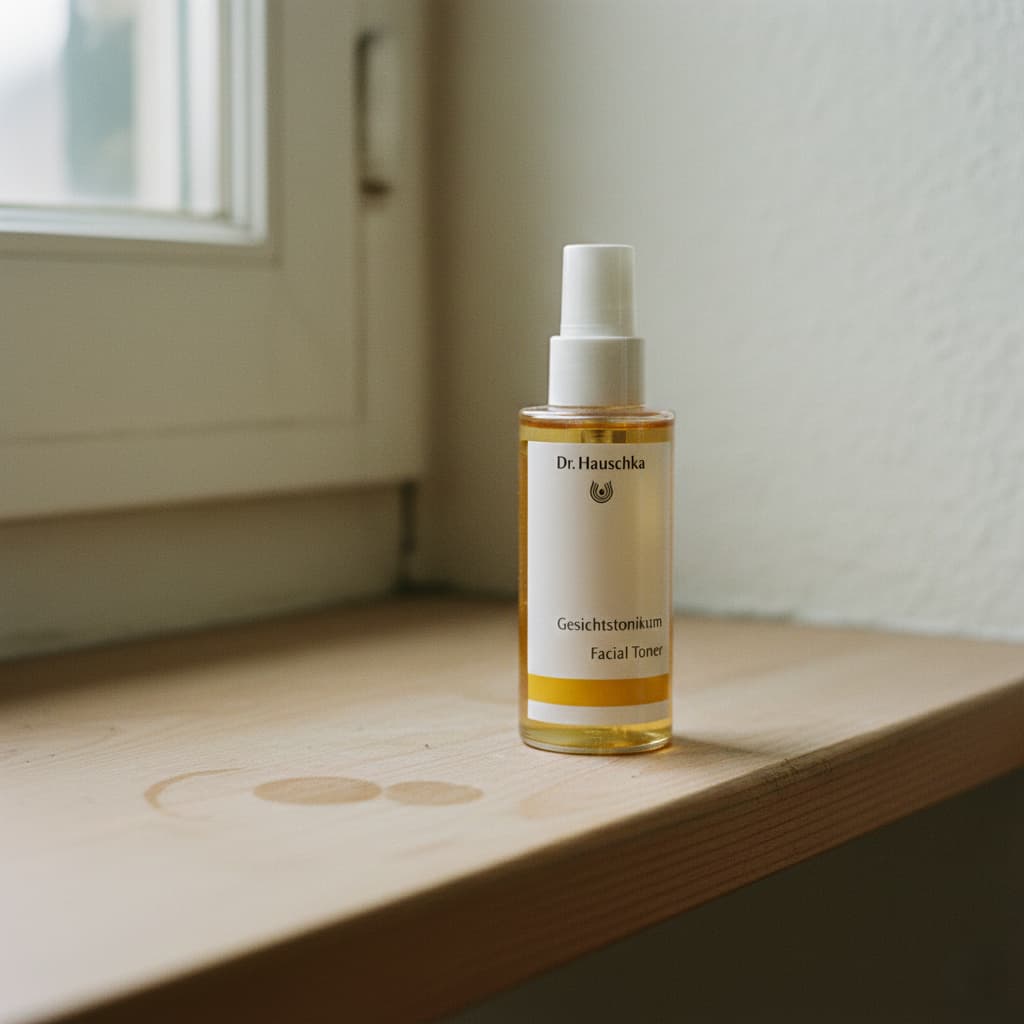
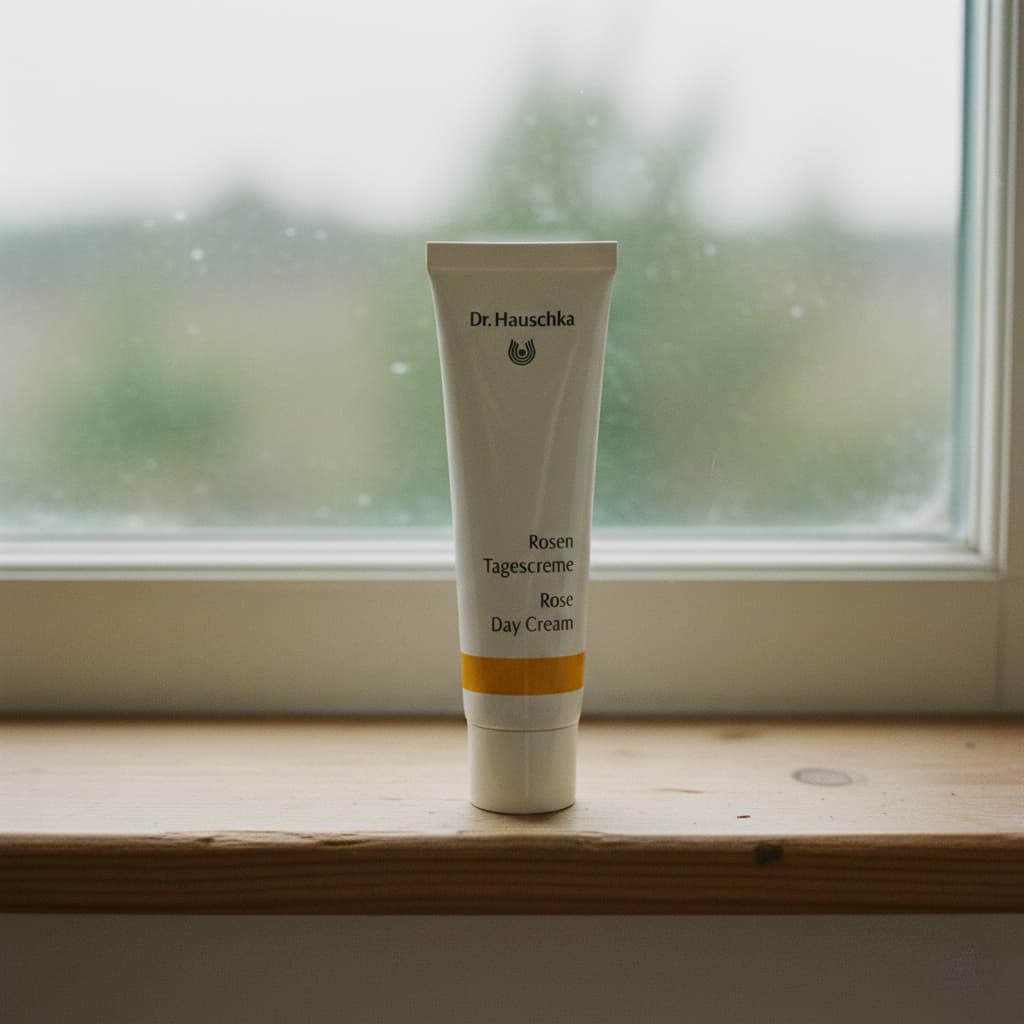
Wood, stone, and linen surfaces reflecting organic ingredients and artisanal production.
Everyday Ritual Contexts
Bathroom environments that mirror real daily use.
Ingredient-Oriented Compositions
Scenes incorporating natural elements that visually connect the product with its formulation. The evaluation criteria mirrored the perspective of a beauty art director:
- Packaging accuracy
- Skin and material realism
- Ingredient plausibility
- Environmental credibility
- Overall brand alignment
The key question was simple: Would these images feel acceptable within a premium skincare brand ecosystem?
What Worked and What Required Restraint
What worked
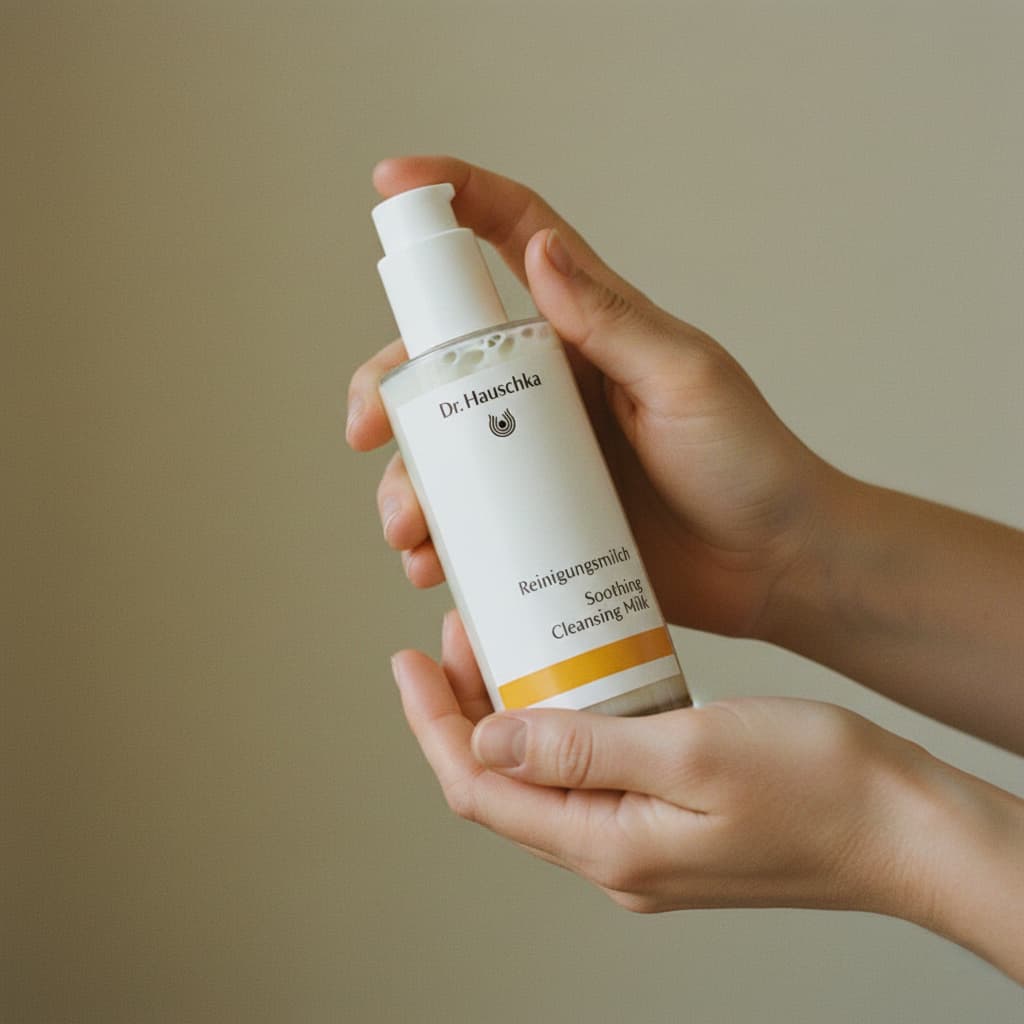
- Packaging identity remained consistent across contexts
- Natural materials reinforced ingredient credibility
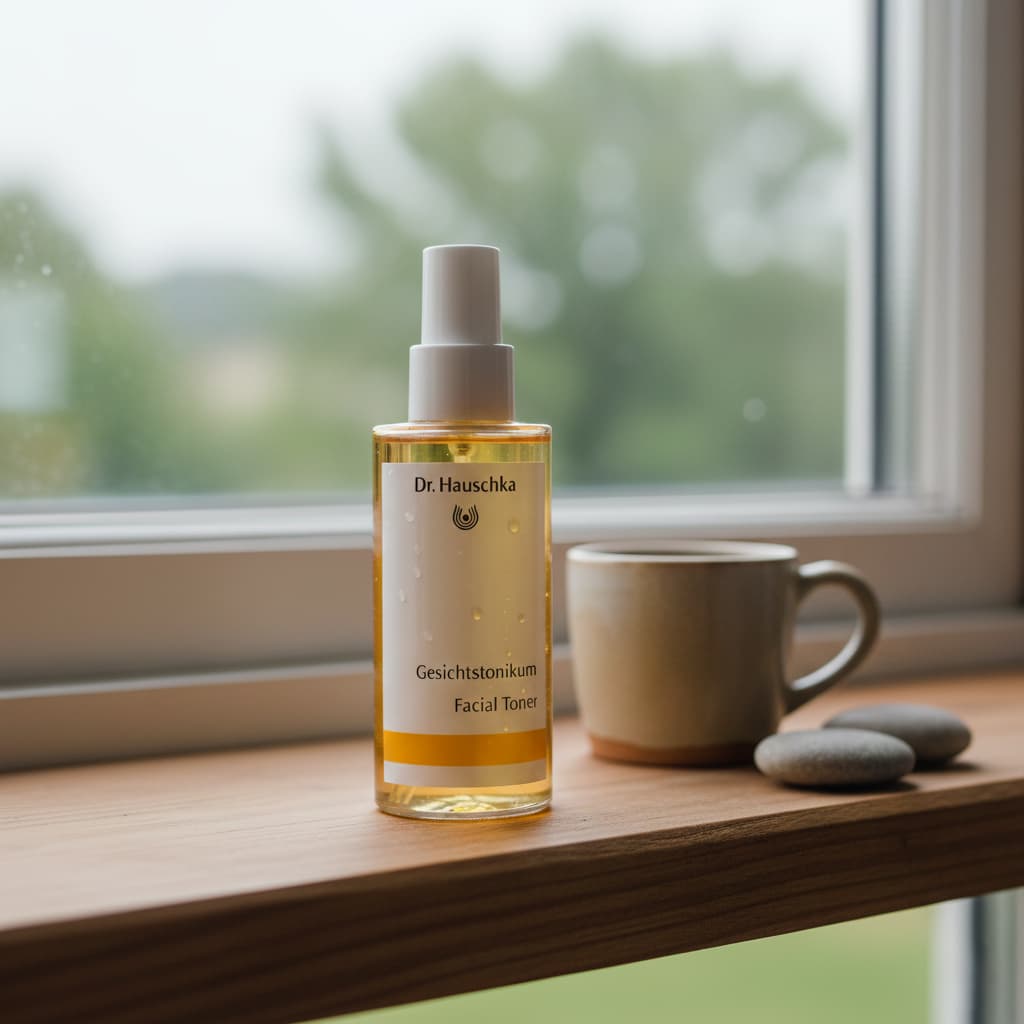
- Soft daylight produced believable skincare environments
- Compositions remained calm and product-focused
Where restraint was necessary
- Perfect skin textures reduced authenticity
- Excessive shine or glow weakened dermatological credibility
- Ingredient scenes required subtlety rather than decoration
- Minimalism had to be preserved to maintain brand tone
The experiment confirmed that AI can extend product imagery effectively but only under strict visual discipline.
Where This Approach Makes Sense
A realism-first AI workflow can support:
- PDP secondary imagery
- CRM and editorial content
- Ingredient storytelling
- Visual context testing before production
It is not intended to replace:
- campaign hero visuals
- art-directed beauty editorials
- high-concept brand storytelling
Understanding these boundaries is essential to preserving brand integrity.
Why This Matters for Skincare Brands
Beauty and skincare brands rely heavily on visual trust signals: Texture realism, Ingredient authenticity, Packaging precision, Environmental context… A controlled AI workflow allows brands to experiment with new visual environments without risking brand perception or production budgets.
Rather than replacing photography, it becomes a decision-support tool for visual experimentation.
Final Thought
The question for skincare brands is no longer whether AI can generate images. The real question is whether AI can operate within the same visual discipline that already governs beauty photography.
This experiment suggests that under realism-first constraints, AI can extend skincare imagery into credible new contexts without compromising brand trust. That narrow space between experimentation and restraint is where the technology becomes genuinely useful.
