Introduction
AI-generated imagery is often discussed in extremes: either as a cost-saving miracle or as unusable visual noise. In categories like eyewear, both views miss the point.
Eyewear photography is unforgiving. Frames sit on faces. Lenses reflect environments. Millimetres matter. Any loss of realism immediately erodes trust.
This article documents a controlled experiment: can AI be used to extend existing eyewear photography into lifestyle contexts while preserving optical credibility and brand restraint?
The Problem with “AI Lifestyle” for Eyewear
Most AI lifestyle imagery fails eyewear brands for predictable reasons:
- Frame geometry subtly changes
- Lenses behave like tinted glass, not optics
- Face-fit becomes symmetrical and unnatural
- Styling drifts into influencer or fashion-editorial territory
For brands built on precision and understatement, these failures are not cosmetic — they are disqualifying.
A Different Starting Point: Constraint, Not Freedom
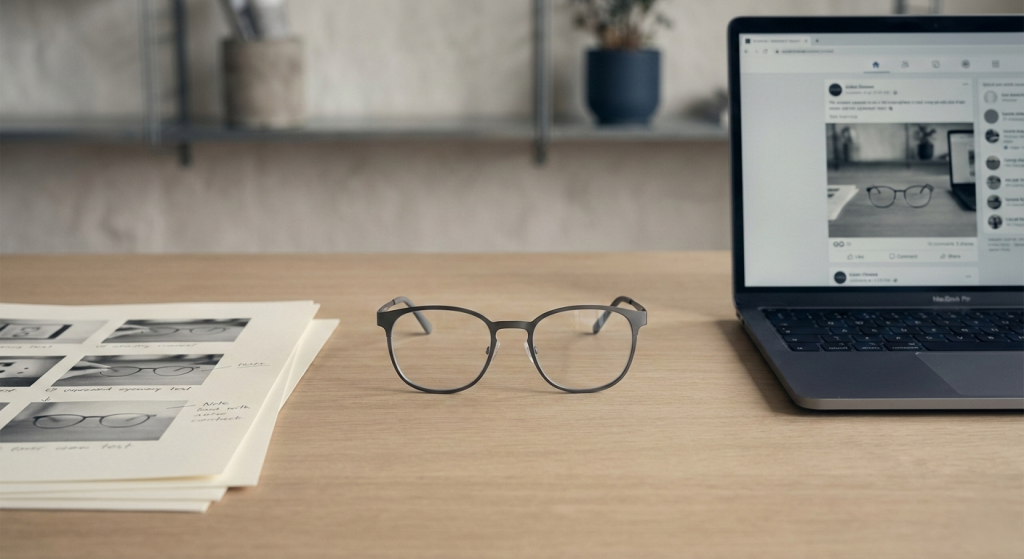
Instead of prompting from scratch, this workflow starts with existing brand assets:
- Product-only images as the geometry source [Sunglasses & Glasses]
- Existing ecommerce models as fit references
- Realistic Northern European environments
- Overcast daylight and neutral interiors
The goal is not visual invention, but controlled extension.
Every test follows the same rules:
- No changes to frame design, color, or proportions
- Lens reflections must match the environment
- Slight human imperfection is preferred over symmetry
- Editorial realism over stylisation
The Test Setup
For this pilot experiment:
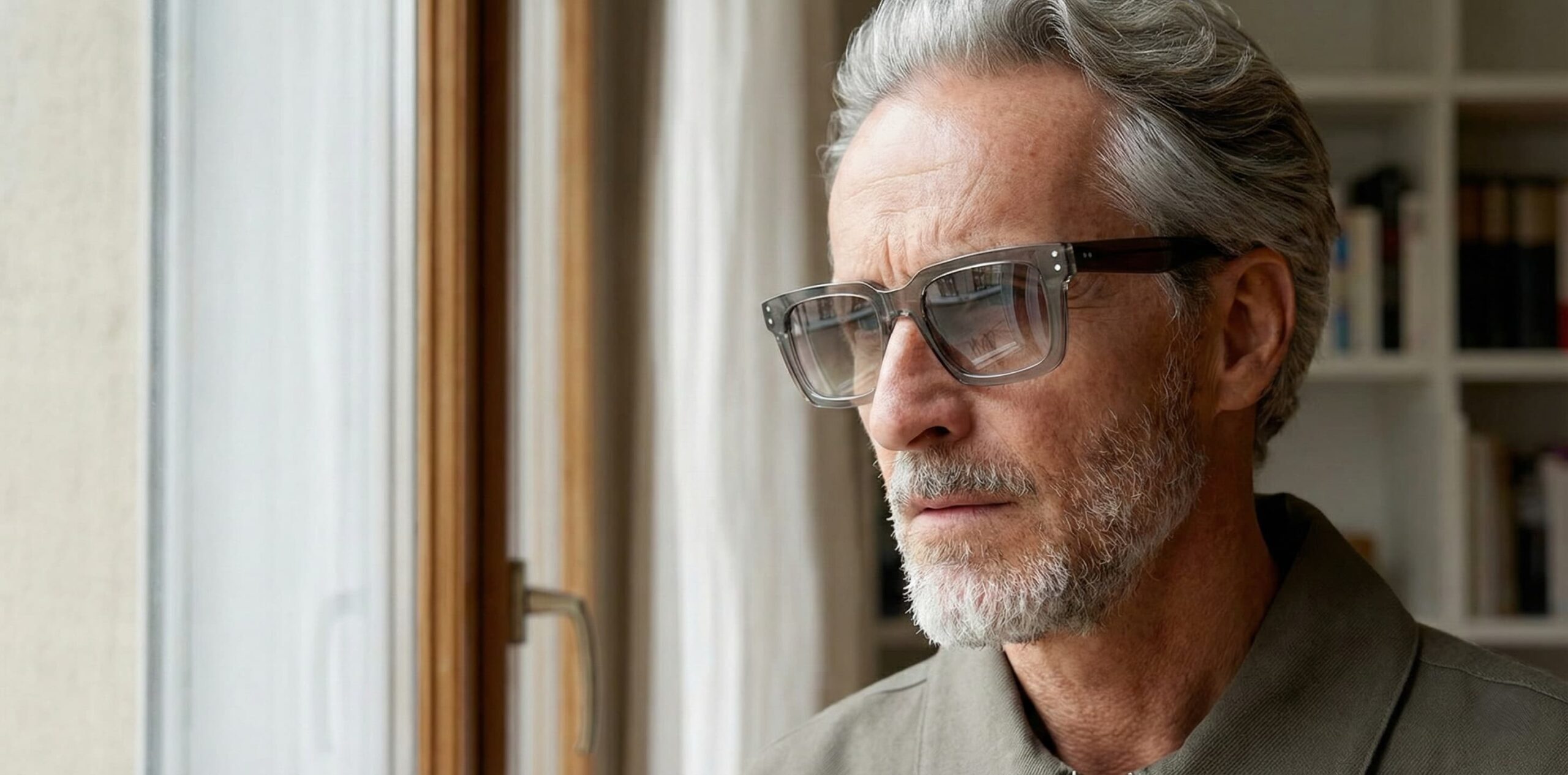
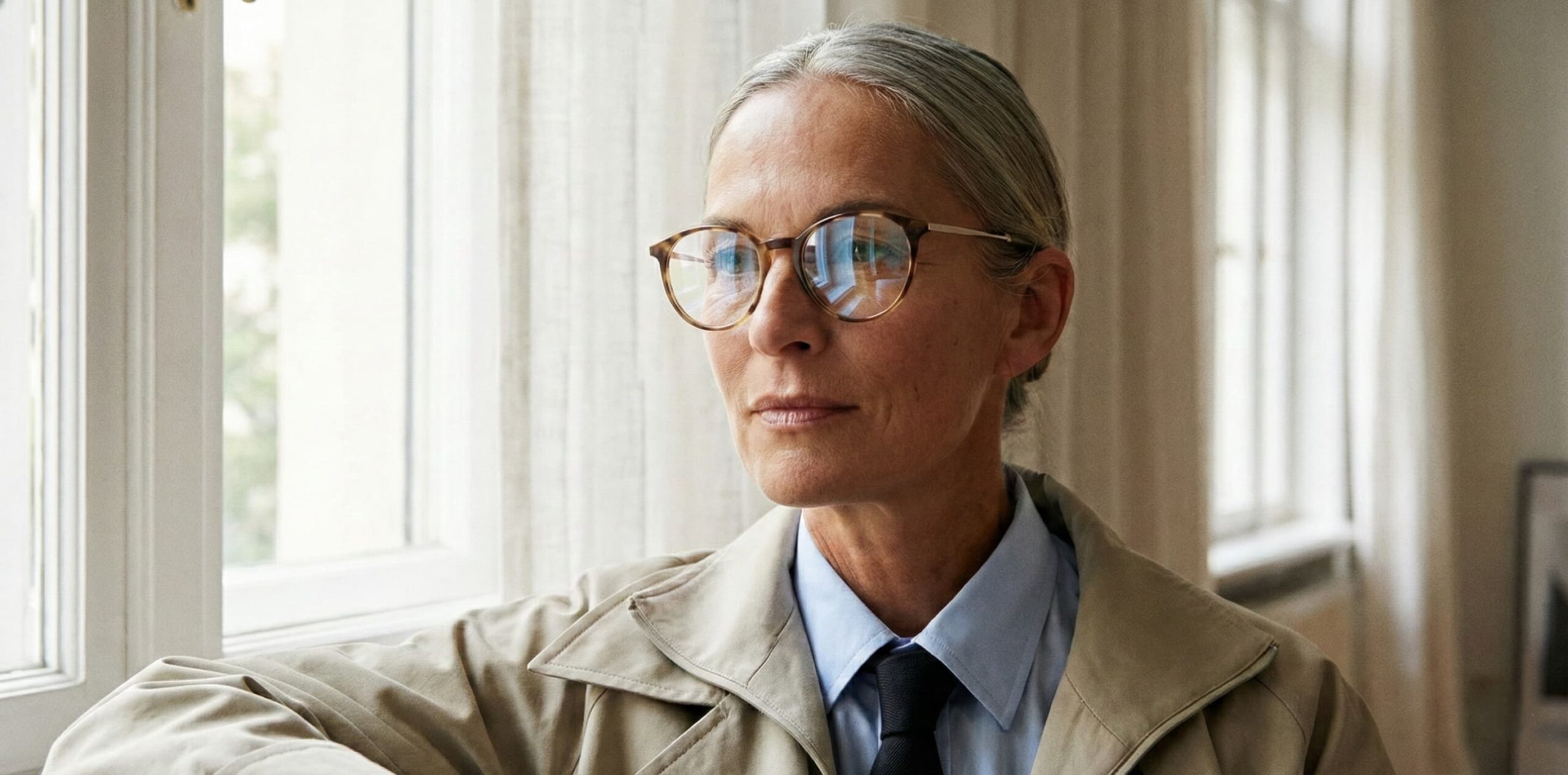
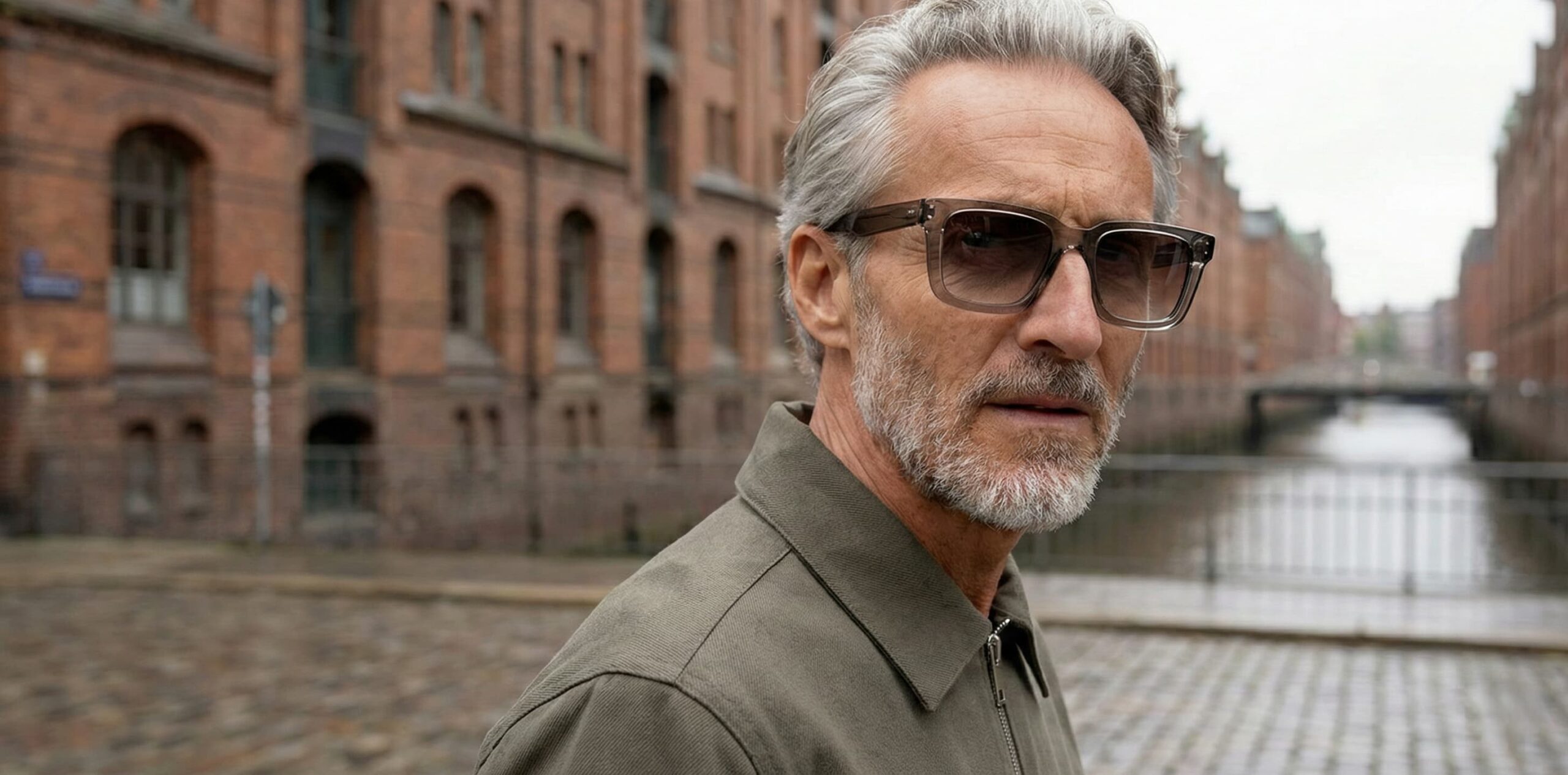
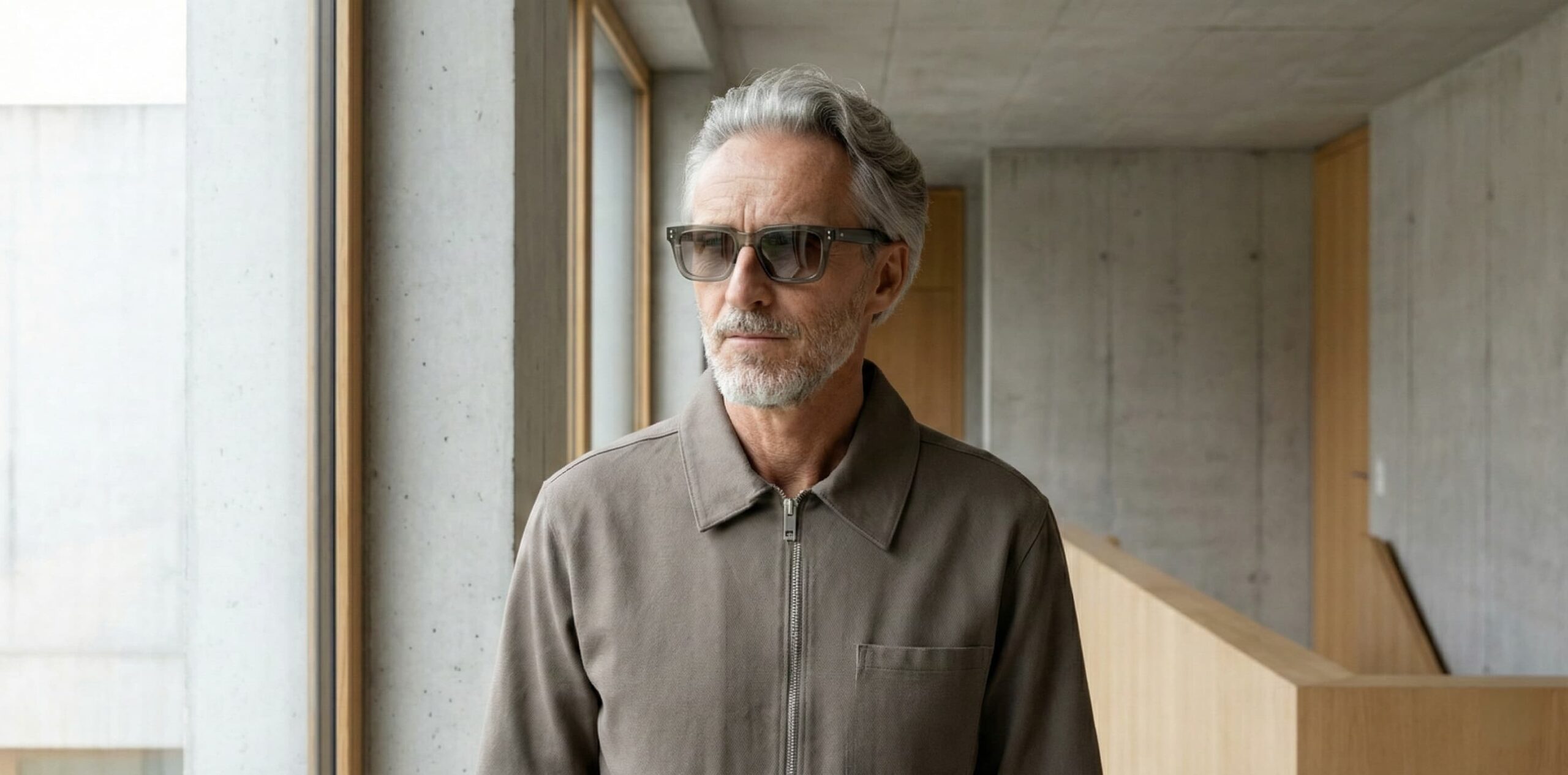
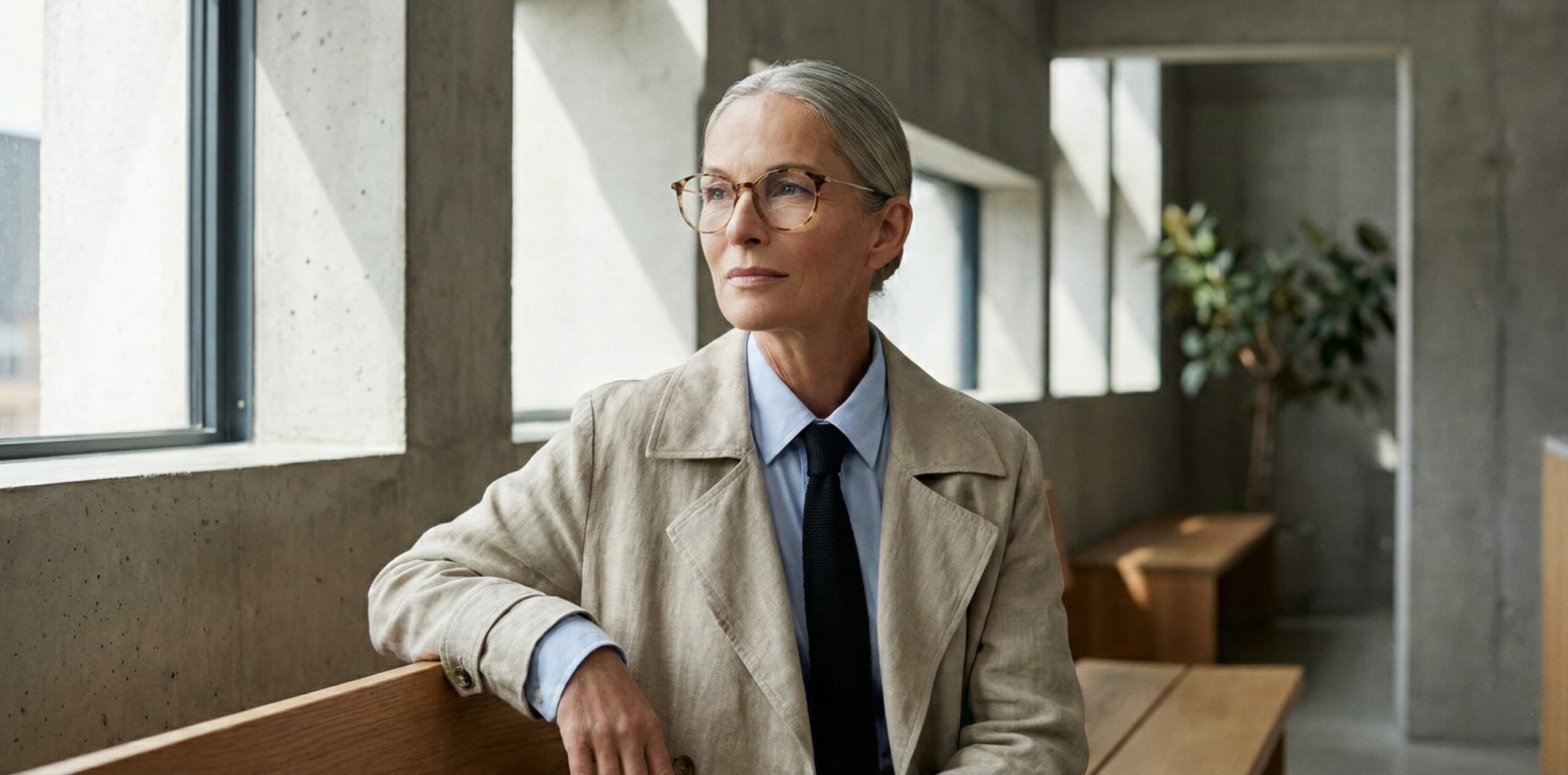
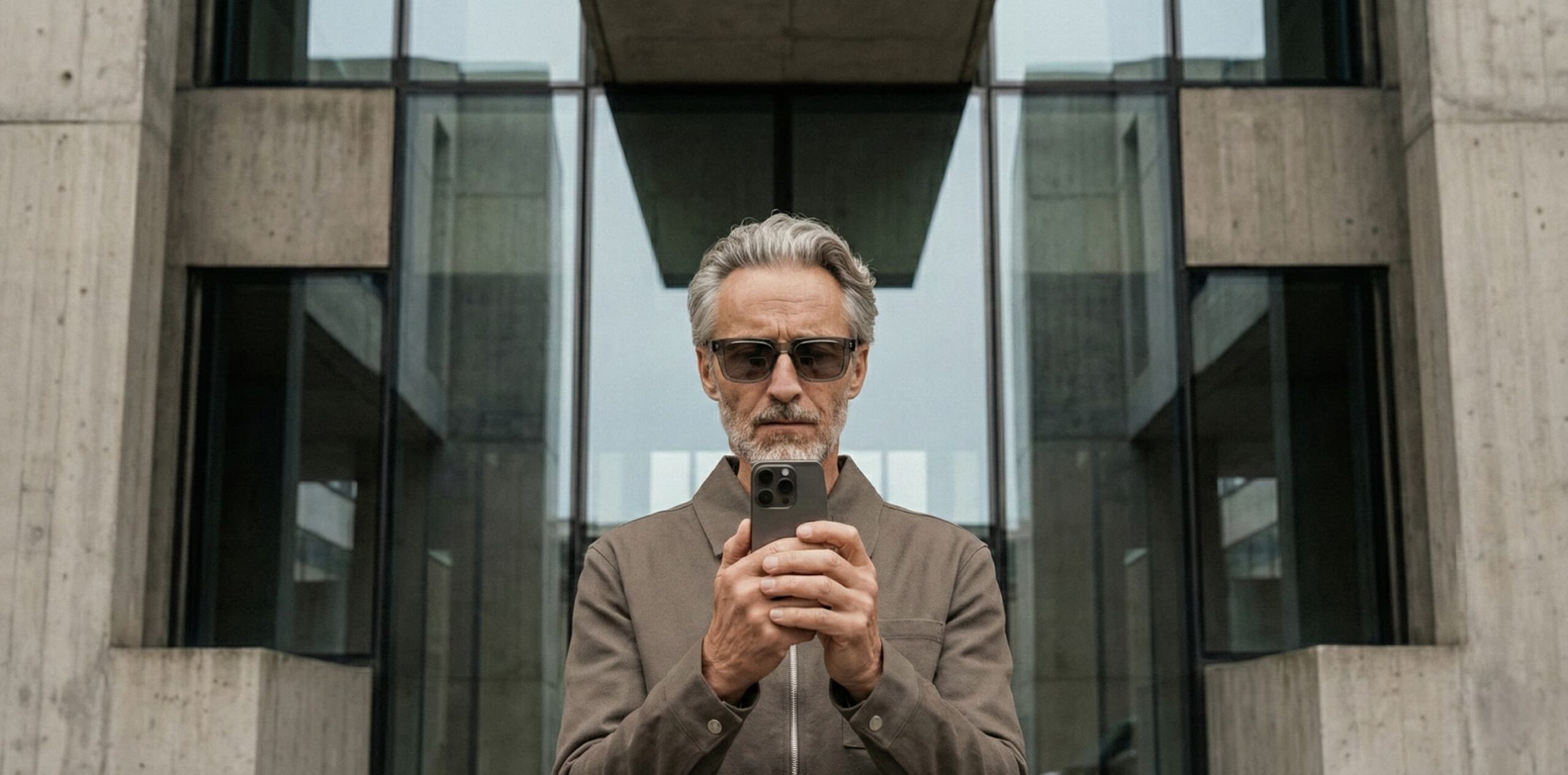
- One male frame and one female frame were used
- Each was tested in:
- An interior, accuracy-focused scenario
- An exterior, lifestyle-context scenario
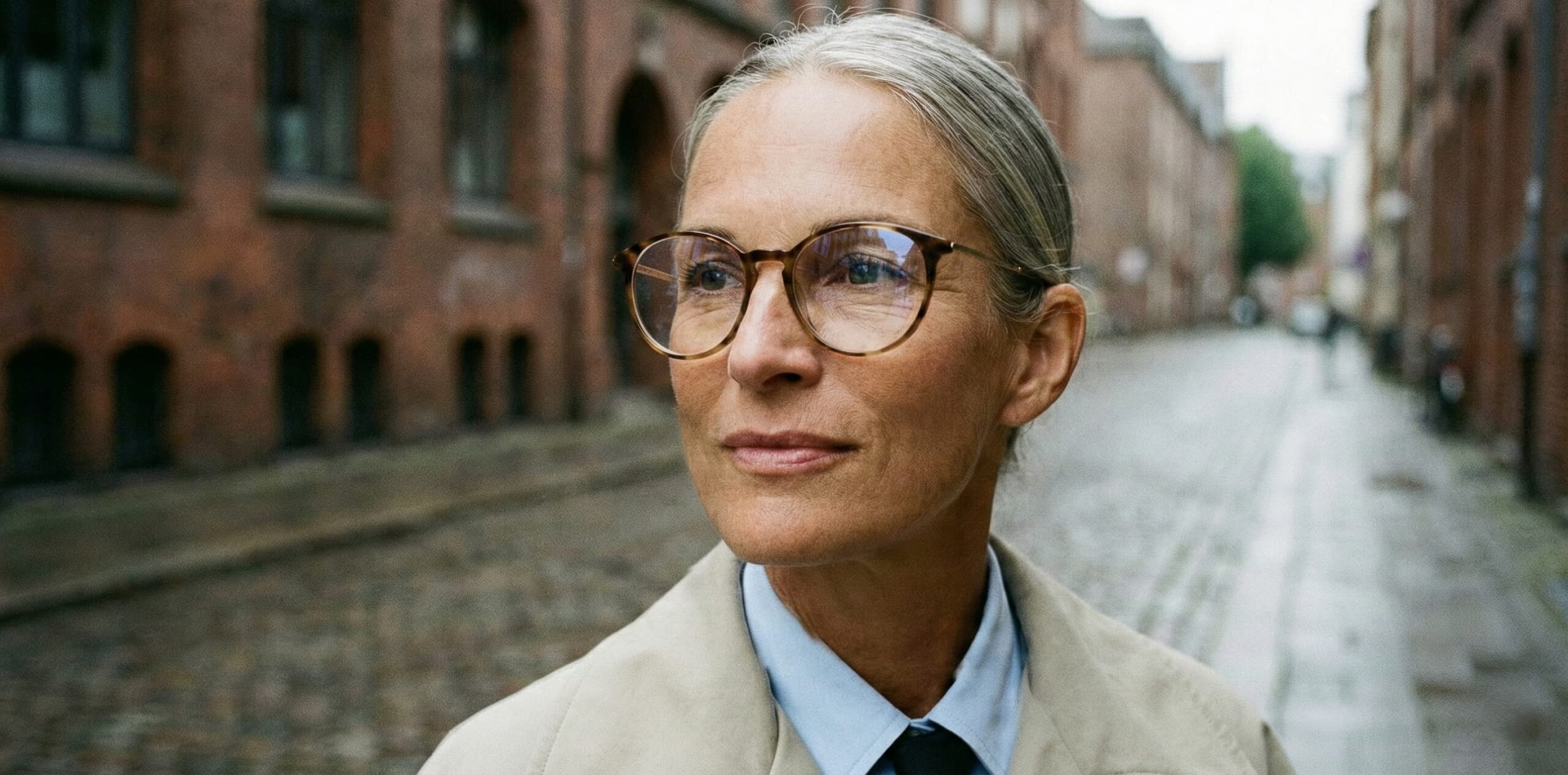
The images were evaluated against the same criteria an eyewear art director would use: fit, scale, material realism, and overall believability.
What Worked — and What Didn’t
What worked
- Frame identity remained consistent across contexts
- Lens transparency and reflections stayed plausible
- Models read as real people, not synthetic composites
What required restraint
- Perfect symmetry had to be actively avoided
- Over-polished skin immediately reduced credibility
- Editorial styling had to stay secondary to product truth
The takeaway was not that AI replaces photography — but that, under strict constraints, it can responsibly extend it.
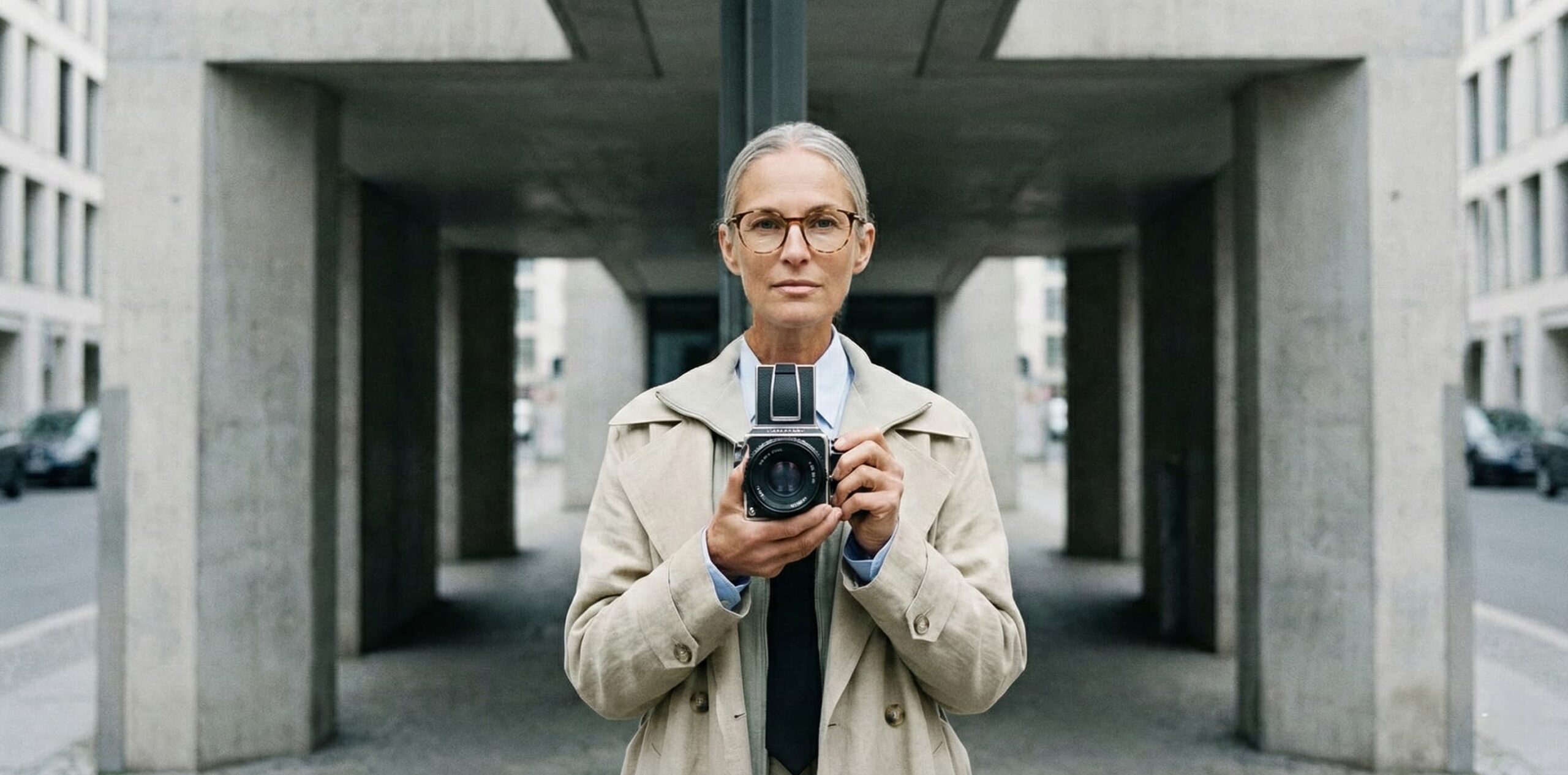
Where This Makes Sense (and Where It Doesn’t)
This approach may be relevant for:
- PDP secondary imagery
- CRM and editorial extensions
- Testing new contexts without full production
It is not a replacement for:
- Hero campaigns
- Art-directed brand storytelling
- High-emotion fashion narratives
Understanding those limits is part of making the tool usable.
Final Thought
For eyewear brands, the question is no longer “Can AI generate images?”
It’s “Under what constraints does AI stop being a liability?”
This experiment suggests that realism-first, accuracy-aware workflows can open a narrow — but valuable — space between traditional photography and unusable AI imagery.
That space is where responsible experimentation should happen.
