
Image-generation tools are becoming more efficient, more affordable, faster and, as a consequence, much more accessible at a professional level. The competitive advantage of simply producing images with AI is fading, and little by little it’s shifting toward brand control over what actually gets produced.
The impact of seeing an image produced with AI is getting smaller. Partly at a visual level, because of how fast the technology keeps improving. And partly at a practical level: production costs are now attractive for agencies, independent professionals, designers or in-house teams. You no longer need a large structure or a generous budget.
This is fundamentally positive for brands. But it also creates the opposite effect: the simple ability to generate unique or attractive images is losing its value as a differentiator.
There’s a line from Star Wars: Episode I (The Phantom Menace) that sums this up well. Qui-Gon Jinn tells Jar Jar Binks: «The ability to speak does not make you intelligent.» Bringing that back to this discussion: the ability to generate images does not make you different.
We’re already at a point where AI can create almost any image. So the question needs to shift, toward whether a brand can create hundreds of new visual assets without losing control, without those assets ever stopping to breathe like the brand, without them stopping to feel recognizably their own.
I think that’s where the real value of AI-assisted visual production for brands lives.
When production stops being the differentiator
The technological and adoption barrier is falling fast. Technology always moves faster than market adoption, but we’re clearly heading toward abundance. And we’ve seen this pattern before. Using Photoshop didn’t make us great image retouchers. Owning a high-end camera didn’t eliminate the value of a photographer. WordPress didn’t eliminate web developers or designers.
Digital tools expand our capabilities, but they don’t replace judgment, taste, creativity or intuition. I think exactly the same thing is happening with AI image generation.
When most creative teams, agencies and competitors sit at the same level of technical capability and availability, access to the generation model itself stops being a meaningful advantage. The differentiating factor moves elsewhere: which references are used, which product elements can or can’t be modified, which parts of a brand’s visual language need to stay consistent, who decides whether an image is fit for production, and which channels can accept which type of imagery.
I wrote about a related idea in From Reference to Final Image: How AI Photography Actually Works in a Brand Environment. One of the main conclusions was that most of the important work happens before generation. Being able to define references, boundaries, product accuracy and visual logic is what ends up determining whether the final image actually belongs to the brand, or whether it’s simply an attractive image.





The paradox of abundance
At the exact moment production is getting easier, brands need more content, and increasingly content adapted to different markets. A campaign no longer lives on a single platform. Brands need to support organic social, paid media, PDPs, retailer environments, CRM. Different aspect ratios, local market idiosyncrasies, seasonal adaptations, launches, additional SKUs, constant creative testing. That’s a lot of variables putting pressure on production teams.
I explored this from a paid-media angle in The Hidden Bottleneck in Paid Media Isn’t Budget, It’s Creative Throughput. The creative bottleneck usually sits in production, not in testing or distribution.
Adobe’s recent data confirms this pressure with real numbers: content demand has doubled for 96% of marketers surveyed, and nearly two-thirds report at least a fivefold increase. At the same time, timelines are shrinking (76% say their production cycles have gotten shorter and 48% of creative teams admit outright that they’re struggling to keep up). AI image generation is helping ease that bottleneck. 99% of creative professionals surveyed are already using it somewhere in their process.
And that’s where the paradox shows up: the easier it becomes to produce content, the easier it also becomes to lose control of it. Remove one bottleneck, and you’re exposed to a new one: brand control.





A technically excellent image can still be a bad brand image
If a marketing or communications team suddenly becomes capable of producing ten times more images than before, that doesn’t mean ten times more useful output. It means ten times more opportunities for inconsistency. Product proportions that drift. Reflections that stop making physical sense. Labels or typography reinterpreted. Materials that behave wrong. An environment that stops making sense with the product.
And beyond product fidelity, something less obvious can happen: the visual language itself can start to drift. This tends to happen when the model is asked to resolve decisions that were never properly settled beforehand: composition, materials, angles, how the product relates to its environment or to people, how far the creative concept can go, when an image starts looking «too AI».
The result can be technically flawless and still miss the brand entirely. The lighting can be excellent, the materials realistic, the composition attractive, and it can still be completely wrong for that specific brand.
There’s another side to this increase in production: more images also mean more reviews from decision-makers across different teams. More selection, more approval, more variations, more files, more opportunities to get it wrong and to become inconsistent. The friction in the system doesn’t disappear. It just moves to a different part of the organization.




The prompt is not the system
I’m a strong believer that the prompt itself is becoming less of a differentiator. Not because instructions stop mattering (quite the opposite). Being able to communicate exactly what you want and how you want it remains fundamental. But the prompt, by itself, is not the center of the process.
The more we use these technologies, the more obvious it becomes that they amplify our existing abilities while also guiding us through areas where we might not have the same expertise. That can be extremely useful. But it also means we need to understand what decisions we’re delegating.
Before asking the model for anything, a few basic elements need to be clear, and ideally internalized: the brand’s visual language, the reference system, physical product fidelity, creative direction, the boundaries around variation, quality control. These aren’t details surrounding the generation process. They are the control system. Without them, better access to the technology doesn’t automatically translate into better visual production.





From «create another image» to controlled visual extension
Which brings me back to the same premise. The valuable result isn’t more images, or even better-looking images. It’s the ability to extend a brand’s visual assets in a controlled way.
I keep running into this distinction working across different sectors. There’s a real difference between «create another image» and «take this product, this campaign, this existing visual system, and extend it into new commercial contexts without losing the brand’s identity». Those are two completely different production problems.
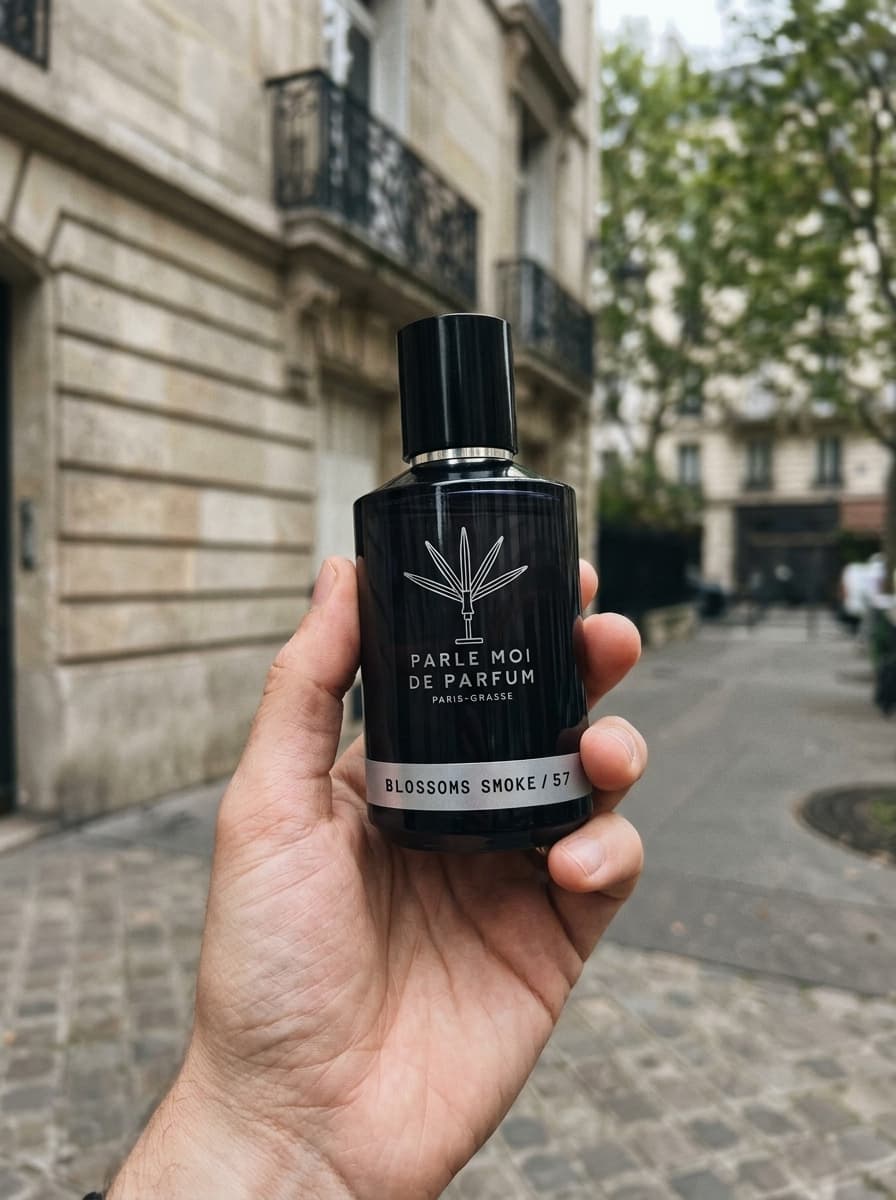
I’ve explored this approach in AI-assisted interior photography for furniture brands, where scale, materials, geometry and the logic of the environment need to stay stable for the image to feel credible. And I’ve worked deeply in niche perfumery, a sector I know from the inside, with over ten years of experience there, where glass behavior, reflections, label and packaging fidelity, and the balance between creativity and realism are especially sensitive. The mistake there is rarely technical: it’s translating an olfactory note into a literal object without first studying the house’s art direction, its editorial rhythm, its materiality. The image needs to feel like part of the brand’s ecosystem, not a generic illustration of «perfume.»
Different categories, different constraints. But the underlying problem stays the same. What’s hardest to scale, above and beyond the ability to produce thousands of images, is still judgment, taste, understanding of the brand and its audience, consistency, restraint, the ability to choose, critical thinking, and maybe above all, knowing what shouldn’t be generated.
Access to the technology won’t be the advantage
AI image-generation technology will keep improving. Adoption will keep growing across companies, agencies and independent professionals. And because of that, simply saying you «produce images with AI» will become less and less interesting.
That doesn’t mean the technology can’t create competitive advantage. It means access to the technology won’t be that advantage. The advantage will come from how it’s integrated, from experience, from creative decisions, from reference systems, from quality standards, from knowing which variables can change and which can’t, from maintaining consistency while increasing production.
Generating images is becoming easier. Building a system capable of helping a brand scale its visual production while keeping control of it is not.
